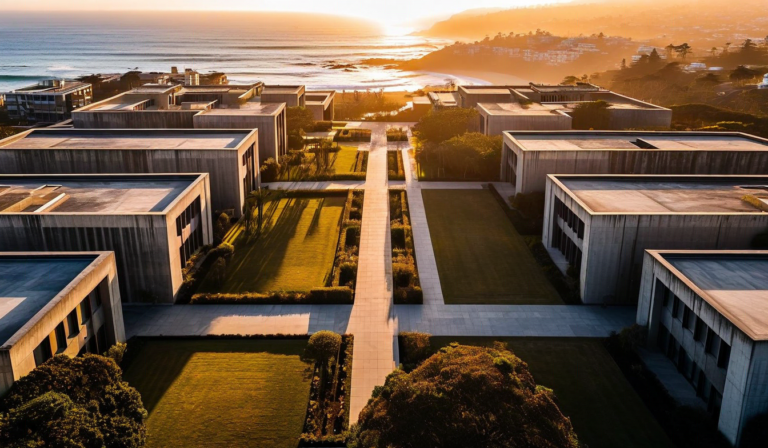
We are based in La Jolla. We have been based in La Jolla since we started, and that choice was deliberate. The research density here — Scripps Research, Salk Institute, UCSD, Sanford Burnham Prebys, and the Torrey Pines mesa cluster of established biotech companies — represents a scientific resource that is genuinely comparable to the Kendall Square or Mission Bay clusters that get more attention in the national press.
What is less visible, particularly to founders who are early in their relationship with this geography, is how the ecosystem works and who the relevant people are. This is not a comprehensive directory. It is the set of things we wish we had been told clearly when we were orienting ourselves here, offered to founders who are doing the same.
The Research Institutions
There are five core research institutions that matter for life sciences company formation in La Jolla.
Scripps Research is the largest private nonprofit biomedical research institution in the US by grant funding, with particular strength in chemical biology, structural biology, and drug discovery methodology. The technology transfer office — TSRI Ventures — has been active in supporting spinout formations and has improved its term structure significantly over the last several years. The institution's depth in medicinal chemistry is a specific and underappreciated asset for founders working on small molecule programs.
Salk Institute has exceptional strength in plant biology, computational neuroscience, and cancer research. The spinout history from Salk is smaller than Scripps by volume but includes some genuinely important companies. The institute's approach to technology transfer is researcher-friendly in ways that not all academic institutions manage. If your science originates from Salk, the licensing conversations tend to be more collaborative than adversarial.
UCSD encompasses multiple departments with biotech-relevant output: the School of Medicine, the Jacobs School of Engineering, and the Qualcomm Institute for health innovation applications. The sheer size of UCSD means the technology transfer office handles a large and heterogeneous portfolio, and experience with the office varies significantly by department and by relationship with specific TTO officers. The Center for Translational Science has been building more systematic infrastructure for early-stage company formation around UCSD IP over the last three years.
Sanford Burnham Prebys focuses on cancer, neuroscience, and rare childhood disease, and has been through organizational changes in recent years that have affected its spinout pace. The underlying science in specific labs remains world-class; the institutional translation infrastructure is rebuilding. Worth watching for individual lab-level opportunities rather than a broad institution-level thesis.
The J. Craig Venter Institute is more specialized — synthetic biology, genomics, environmental biology — and has a smaller spinout volume than the larger institutions, but is relevant for founders working in adjacent areas.
The most important La Jolla career move for a scientist-founder is building relationships at multiple institutions, not just the one where your own research is based. The cross-institutional collaborations that happen informally — over coffee at the Salk cafeteria, at the Torrey Pines tennis courts, at the Sanford Consortium seminars — are how the ecosystem actually works.
The Office-and-Lab Infrastructure
Physical space in La Jolla for early-stage biotech companies has improved substantially over the last decade, though it remains more expensive and less available than founders from academic backgrounds typically expect.
The Torrey Pines area has a cluster of established biotech companies — Illumina, Ligand, the remaining Pfizer and J&J operations — with ancillary shared service providers, CROs, and specialized vendors that make up the operational ecosystem that early-stage companies rely on. Being physically proximate to this cluster matters more than it might seem: vendor relationships, instrument time-sharing, and the informal network of operational knowledge that circulates through lab manager and operations director networks are faster to access when you are in the same geography.
Shared laboratory and incubator space is available at several facilities: the Sanford Consortium building, QB3-affiliated space, and several private life sciences real estate developments that have added incubator-style buildouts to their campus offerings. The inventory is not as large as Cambridge or South San Francisco, and waitlists are real. Plan your space needs twelve to eighteen months ahead if you are doing wet lab work.
The Funding Landscape
La Jolla does not have the concentration of biotech-specialist venture funds that Boston and the Bay Area do. That is a genuine disadvantage for companies that want to build deep relationships with multiple local investors and have competitive tension among local term sheet providers. Most La Jolla companies, in our observation, raise their first institutional round from a combination of one or two local or regional funds — we are one of them — plus one or two funds based elsewhere that are willing to travel for the right science.
That dynamic means founders here typically need to run a broader geographic fundraise earlier than their Boston counterparts, and it means the diligence timeline is often longer because non-local investors need more touchpoints before they are comfortable with a company they cannot visit easily. Building relationships with investors in San Francisco, Boston, and New York before you need capital — through conference presentations, paper publications, and warm introductions through institutional collaborators who have those relationships — is not optional for La Jolla founders. It is the job.
SBIR and STTR funding from NIH and DOD is meaningfully more important to La Jolla company formation than it is in geographies with more venture capital density. Non-dilutive funding strategies that extend runway from inception to Series A are a genuine competitive advantage here, and the research institutions are generally better at helping their spinouts navigate federal grant applications than private sector founders operating independently.
What We Look For
We have been seeing La Jolla companies since before we formalized our fund. Our portfolio has a disproportionate number of companies with institutional roots in this geography, and that is not entirely coincidence — we have spent years building relationships with faculty and postdocs at the research institutions here, and those relationships surface opportunities that are not visible to investors who parachute in from the coasts for diligence trips.
If you are a founder at a La Jolla-adjacent institution with a company in formation, or thinking about one, we are genuinely interested in hearing from you early. Not after you have a Series A term sheet. Early. The companies we have added the most value to are the ones where we were involved before the company had a formal structure, when the questions are still about technology transfer terms, co-founder search, and grant strategy. That is the phase where our network and our institutional knowledge of this ecosystem is most directly useful.
Contact us at [email protected]. We mean it when we say early.