The iPSC cell therapy field has a peculiar problem. The biology works — sometimes impressively. The clinical data coming from early programs in hematological malignancies and certain solid tumors has been enough to sustain serious investment and generate genuine enthusiasm among oncologists. But the path from proof-of-concept clinical results to commercial products is blocked by manufacturing constraints that are harder to solve than the biology was.
This is not a new observation in the cell therapy space broadly. Autologous CAR-T programs ran into manufacturing complexity years ago and most have partially resolved it through process optimization, better bioreactor designs, and sheer institutional knowledge. iPSC-derived cell therapies have a different manufacturing profile and face a different set of constraints.
What Makes iPSC Manufacturing Hard
The iPSC manufacturing process involves several steps, each of which introduces variability and requires quality control before advancing to the next: reprogramming source cells to pluripotency, expanding the iPSC master cell bank under GMP conditions, differentiating iPSCs into the desired therapeutic cell type, and engineering the differentiated cells with the therapeutic modification (often a chimeric antigen receptor or other targeting construct). Each step requires specific culture conditions, defined media formulations, and process controls to ensure product consistency.
The differentiation step is where most of the process development complexity concentrates. Getting iPSCs to reliably produce functional effector cells — NK cells, T cells, macrophages, or other therapeutic cell types — at commercial scale requires protocols that are simultaneously reproducible across batches, compatible with GMP manufacturing environments, and economically viable when scaled to the patient volumes a commercial product needs to serve.
Current differentiation processes are often 20-30 days end-to-end. That timeline creates carrying cost in manufacturing facilities that is difficult to absorb at the price points the market will bear for oncology cell therapies. Shortening the differentiation timeline without compromising product quality has been a key target for process development, but the biology sets a floor that cannot easily be engineering-optimized away.
The companies that solve this are not necessarily the ones with the best biology. They are the ones that treat manufacturing process development as a core scientific discipline — not as a production problem to be handed off to a CDO once the clinical story is written.
The Scale Question
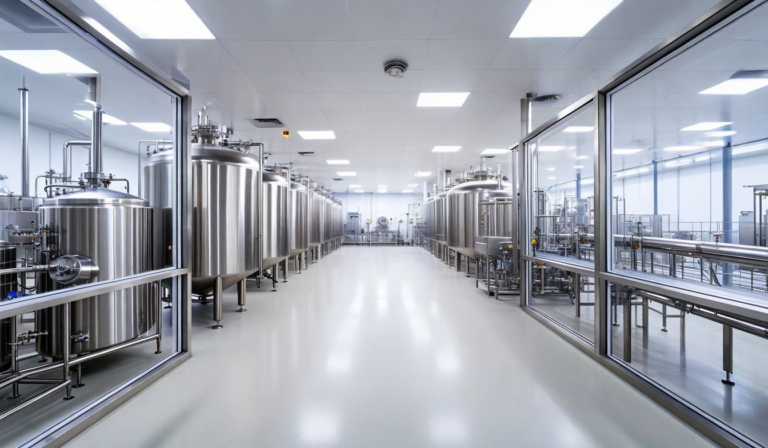
Cell therapy manufacturing is fundamentally different from small molecule or biologics manufacturing in one critical way: scale does not work the same way. A bioreactor for a monoclonal antibody can be made larger to produce more product. Cell manufacturing does not reliably extrapolate that way — the same culture conditions that work at 2L do not automatically work at 200L, and the optimization work required to scale manufacturing is substantial and non-trivial.
The iPSC platform's commercial promise depends on the ability to manufacture a master cell bank once and then use it to produce thousands of patient doses. That allogeneic manufacturing logic is what makes iPSC-derived therapies potentially economically viable compared to autologous approaches. But realizing it requires that the differentiation and engineering processes scale with acceptable product consistency, which requires solving the scale-up problem.
Most of the iPSC programs currently in clinical trials are still using manufacturing processes designed to supply clinical trial material — typically hundreds of doses, not thousands. The process development work required to support commercial supply has, in many cases, not been started in earnest. That gap is the most significant near-term risk for programs that generate positive Phase 2 data.
Where the Interesting Investment Is
We look at three types of opportunities in the iPSC manufacturing space.
First, process development and enabling technology companies. Bioreactor designs optimized for suspension culture of iPSCs and iPSC-derived cells, closed-system manufacturing platforms that reduce contamination risk and labor requirements, and analytical tools for real-time monitoring of culture quality during differentiation — these are picks-and-shovels investments that benefit from iPSC program growth regardless of which specific therapeutic programs succeed.
Second, integrated iPSC platform companies that have deliberately co-developed their biology and manufacturing processes together from the start. These are harder to find but exist. The best ones have process development teams that sit in the same building as the biology teams, run manufacturing development experiments in parallel with IND-enabling studies, and have explicit milestones around manufacturing process readiness that are tied to financing milestones.
Third, companies developing next-generation culture media and growth factors specifically designed for iPSC differentiation at scale. The current generation of culture media used in iPSC differentiation often contains components that are expensive, poorly defined, or not suitable for GMP manufacturing without modification. This is a soluble constraint — the chemistry is known — but solving it requires investment in media development that most iPSC therapy companies treat as a supply chain problem rather than a competitive advantage.
The cell therapy field has been through this manufacturing-limits-clinical-translation cycle before with autologous programs, and those problems were ultimately solved well enough to produce approved products. iPSC manufacturing is genuinely harder in some respects, but the commercial logic for an allogeneic off-the-shelf product is compelling enough that the investment in solving it is warranted. The companies that get there first will have a durable operational advantage that biology alone cannot replicate.